July 25, 2025
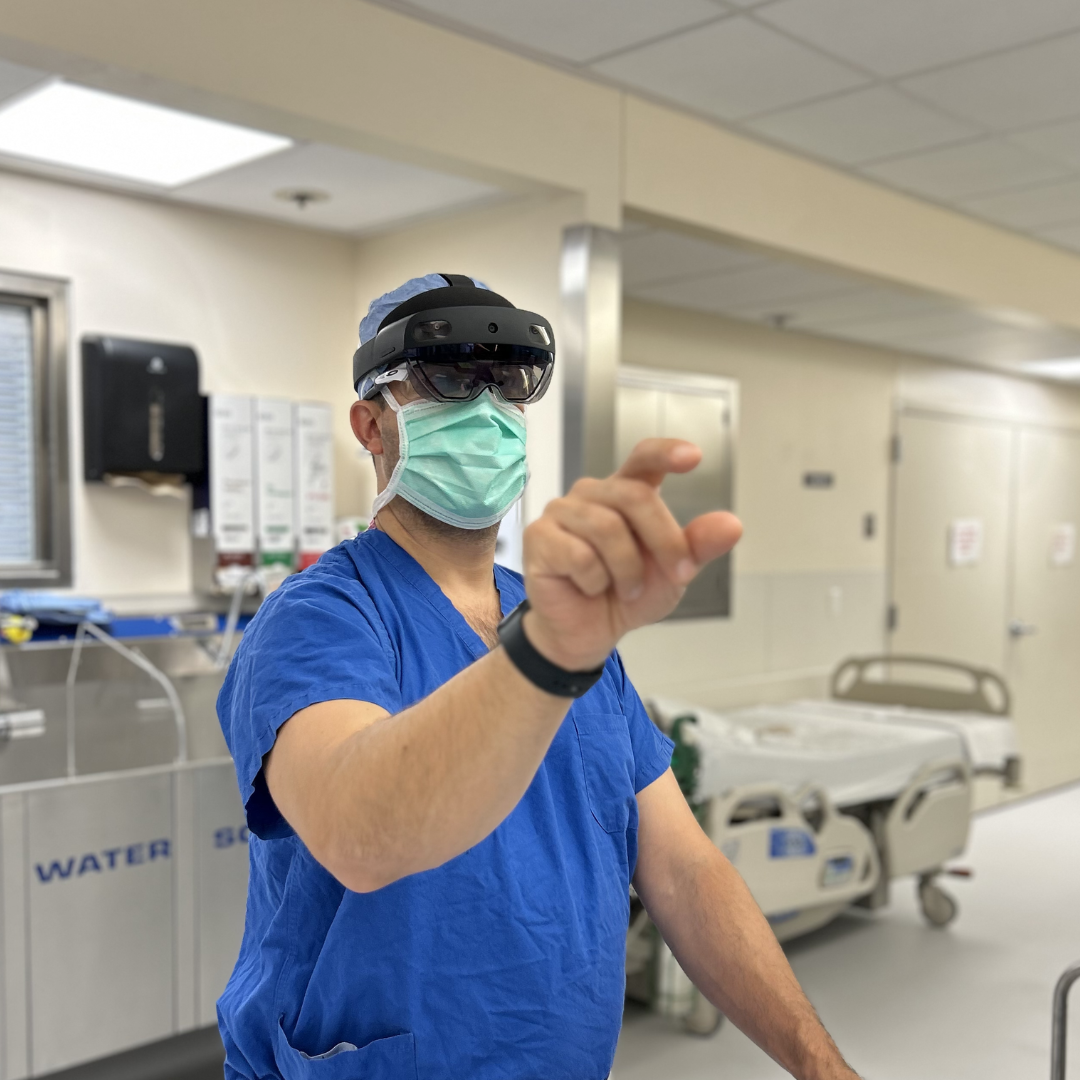 When Ian English, MD, stepped into the operating room for a complex tumor resection, he had a new tool in the toolkit – augmented reality goggles. This lightweight headset was programmed with powerful surgical software that projected a 3D map of the patient's anatomy directly into his field of vision when called upon.
The technology came into play after hours of Dr. English's careful and deliberate tumor resection, when it was time to place the pedestal cup and begin reconstructing the patient's hip. Underneath the goggles though was something even more essential: Dr. English's expertise, impeccable surgical skills and a deep understanding of this patient's anatomy.
Planning in 3D
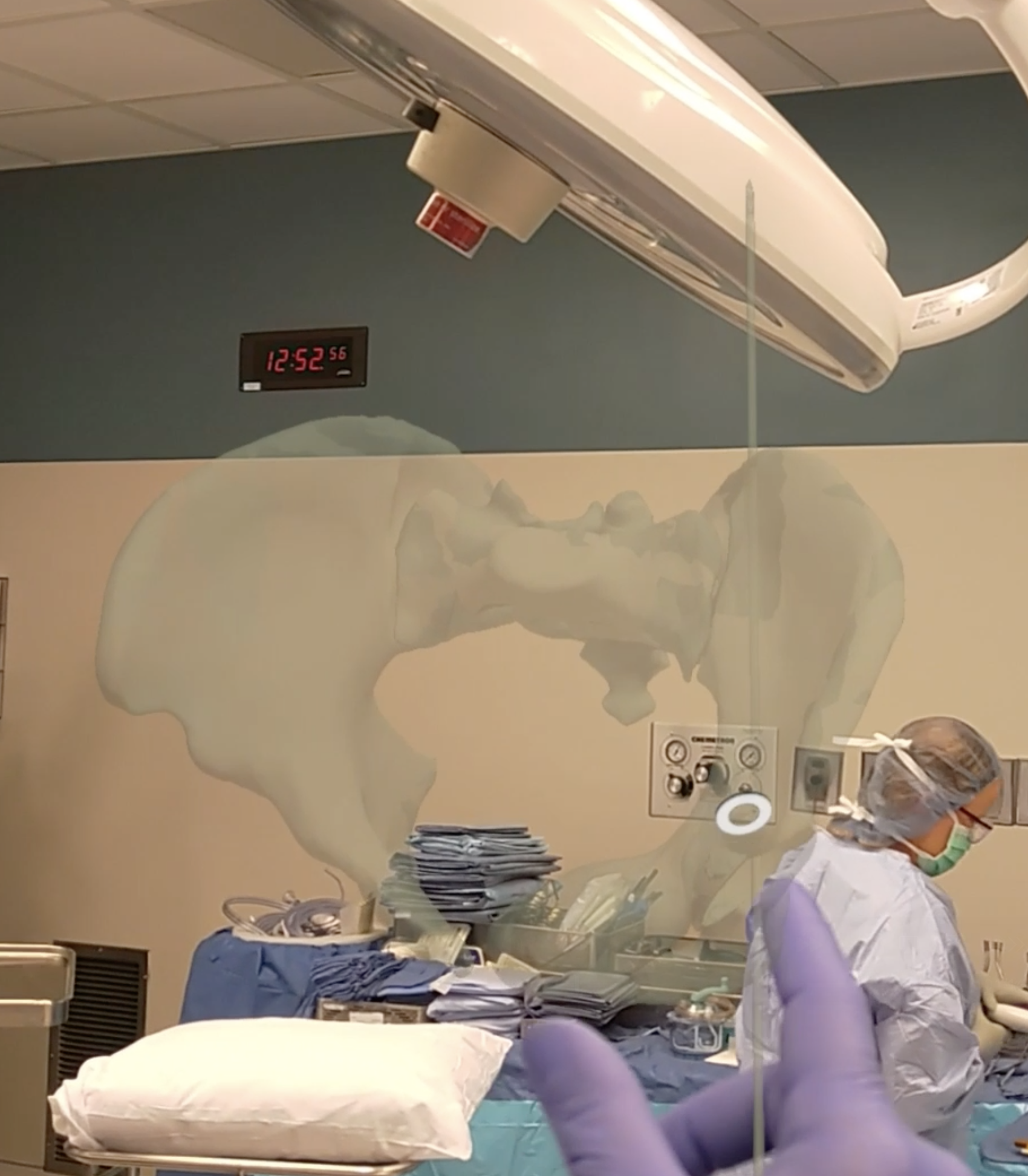
In the weeks leading up to the surgery, Dr. English collaborated closely with biomedical engineers and technology specialists. Together, they reviewed 3D imaging from CT scans and mapped the tumor in a digital blueprint. "We used to plan with static images. Now we have real-time visualization tools," Dr. English explains. "It improves not just surgical accuracy, but also the way we can communicate with patients about what to expect." These planning practices allow surgeons to work with the unique anatomy of a patient's case before they even get in the OR.
A Leap Forward in Surgical Precision
In a groundbreaking moment for surgical innovation, Dr. English became the first surgeon in the United States to use these AR goggles during the navigation of a pedestal cup replacement. The AR overlay provided a critical visual check for planning and executing complex hardware placement. Working alongside CT navigated guidance to project real-time anatomy and cut paths into Dr. English's field of view, the complex internal structures became slightly easier to navigate.
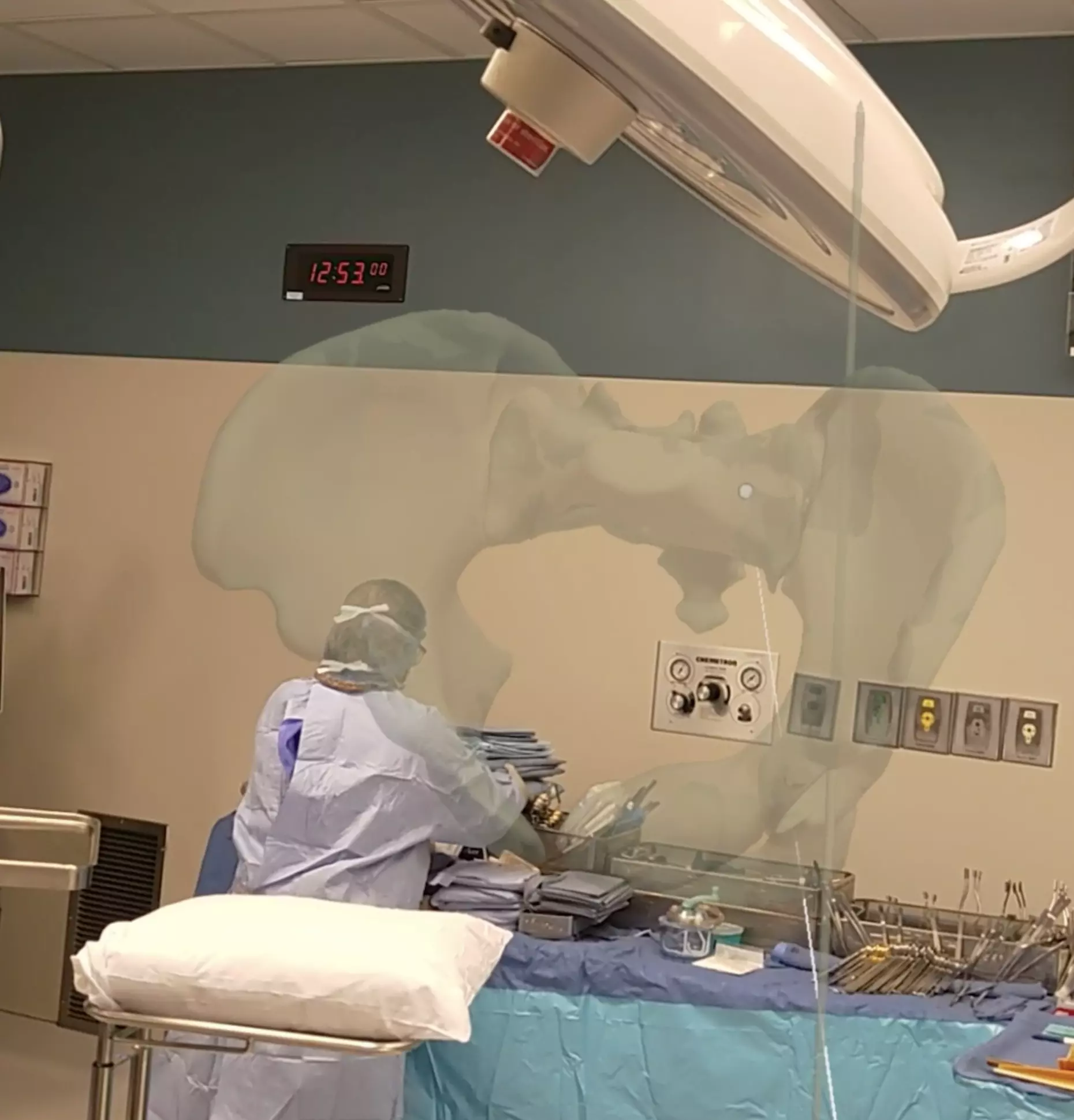 "The technology is evolving quickly," Dr. English said. "And it is exciting to be part of the progress, not just waiting for the future, but actively building it." The innovation did not replace experience; it amplified it. The AR simply helped bring more clarity to the most challenging steps.
A Center of Excellence for Surgical Innovation
Dr. English credits Washington University School of Medicine's environment of excellence for enabling this kind of forward-thinking medicine. "We're part of a center where innovation isn't just encouraged – it's expected. Patients come here because they know we're safely pushing the boundaries of what is possible."
For Dr. English, the view through the AR goggles is only getting clearer, with surgical excellence always at the core.